Essay
The Next Phone
May 13, 2026
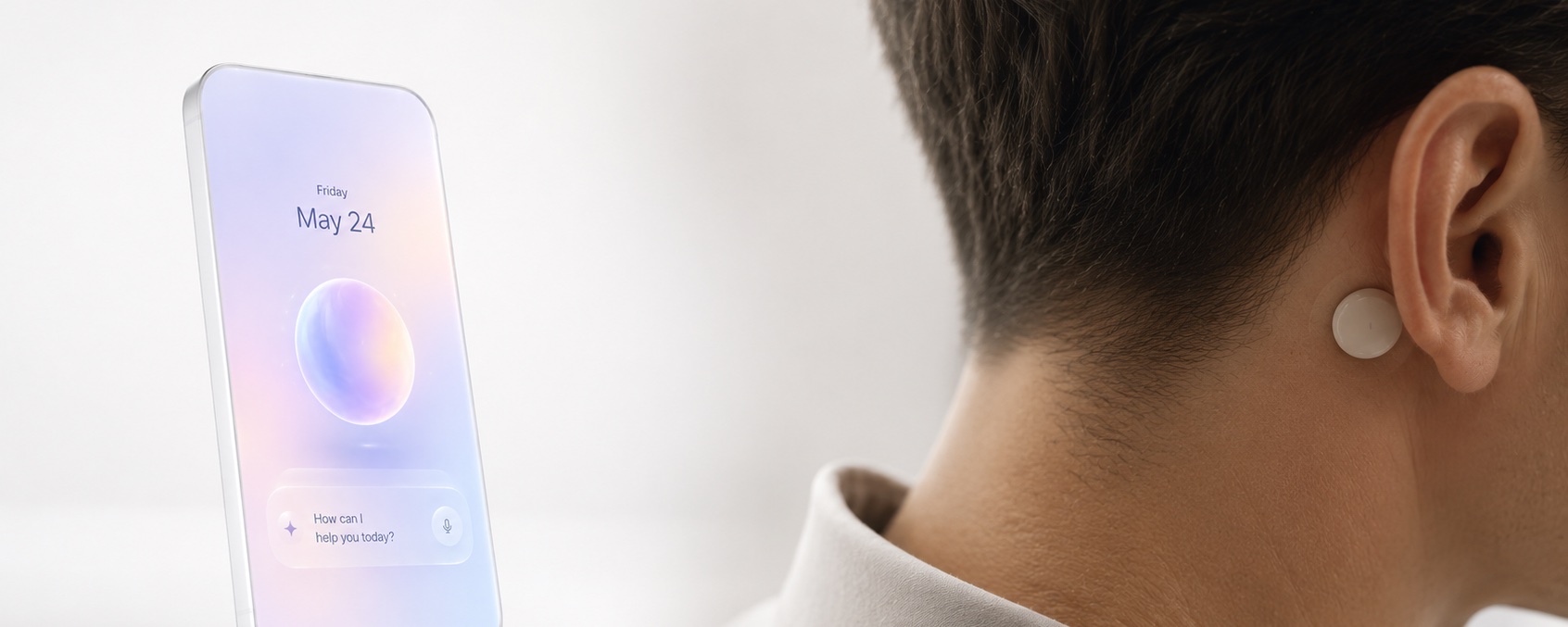
By 2030, we will see first significant decline in iPhone sales since Jobs presented it in 2007.
AI-first phones are coming. Devices you talk to instead of tapping on. Devices that work for you when you are not using them and designed to be used less and get done more.
Here is why it's inevitable, why it's only now possible, and why it has to happen for our wellbeing.
The AppStore gatekeeping is gone
It was impossible to build a phone without an app ecosystem. Good hardware is important, but the marketplace of apps mattered more. Only a giant like Huawei could pull off creating their own AppGallery after being kicked out of Google Play.
That moat is gone.
"Your entire app could've been a tool call for my agent"
Most apps on your phone are wrappers around a few API calls. Booking a ride, ordering food, replying to email, managing your calendar, checking the weather. Now, they can just be an agent's tool calls.
Agents can access external services (apps) via the API / CLI / MCP or Browser.
If an agent is the new interface, the App Store is no longer a moat.
AI Models in your pocket
A phone in your pocket is like a small brain that knows when to call the bigger one in the cloud.
A fine-tuned small open-source model running locally on a single phone today outperforms GPT-3 at launch on many benchmarks. On hardware that fits in your pocket and costs a fraction of what GPT-3 required to run. Every 2-3 years, local small models will be catching up to what we today call state-of-the-art frontier LLMs that can only run in the cloud.
This was the missing piece. The AI-first phone runs simple operations locally and instantly while the heavy lifting (long-context reasoning, complex agentic chains) happens in the cloud.
Your attention is all they need
Your phone and most of its apps are designed to steal your attention.
No, don't rush to label tech companies as evil. It is the market that decided your attention is the most important currency. Advertisement became the core business and product managers of big tech company had the same KPI to optimise for - your attention, and therefore higher screen time.
Let's face it. You paid $1,000 for a device and then installed screen-blockers to remove its default functionalities you paid for and frequently delete and re-install social media apps, don't you?
That's also why sales for "dumb phones" and "brick phones" are growing and why dozens of screen-blocking apps on App Store and Google Play are becoming popular.
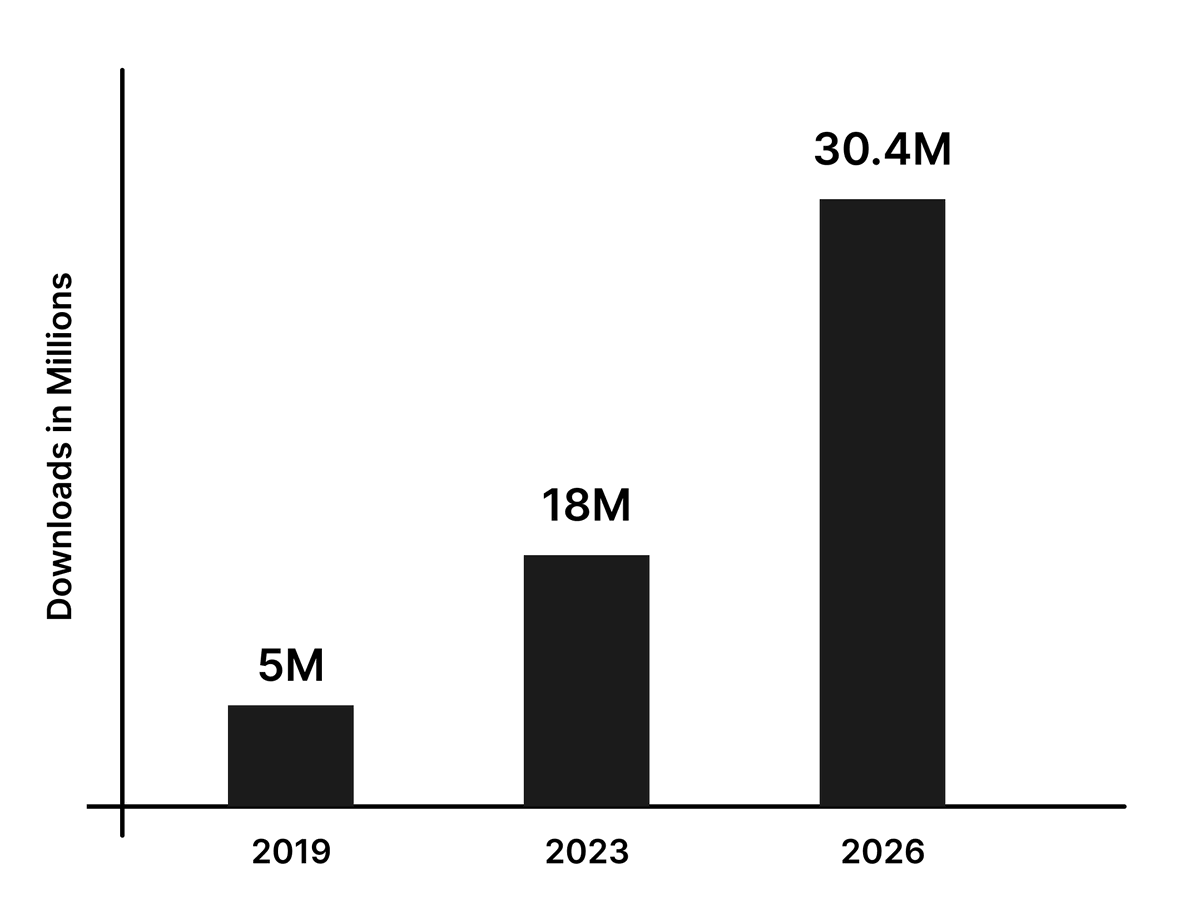
The Next Phone KPI: time it gives back
The Agentic Phone has a completely opposite goal. The less time you spend with it, the better it's doing its job.
It handles your to-dos, schedules your calendar, books that ticket without showing you ten options. It clears your mailbox without making you scroll. It tells you the one thing you need to know and goes quiet.
The phone you love most will be the one that gives you your life back.
Invisible UX
No UI is the new UI. The static grid of app icons is a thing of the past.
Voice-first, text-last. And underneath that - no predefined UI at all.
The interface won't be designed by a developer in advance. It will be rendered live by the AI, based on what you just asked. Ask to compare two flights, and a comparison view appears. Ask about yesterday's run, and a chart appears. None of those screens existed five seconds before you asked. None will exist five seconds after.
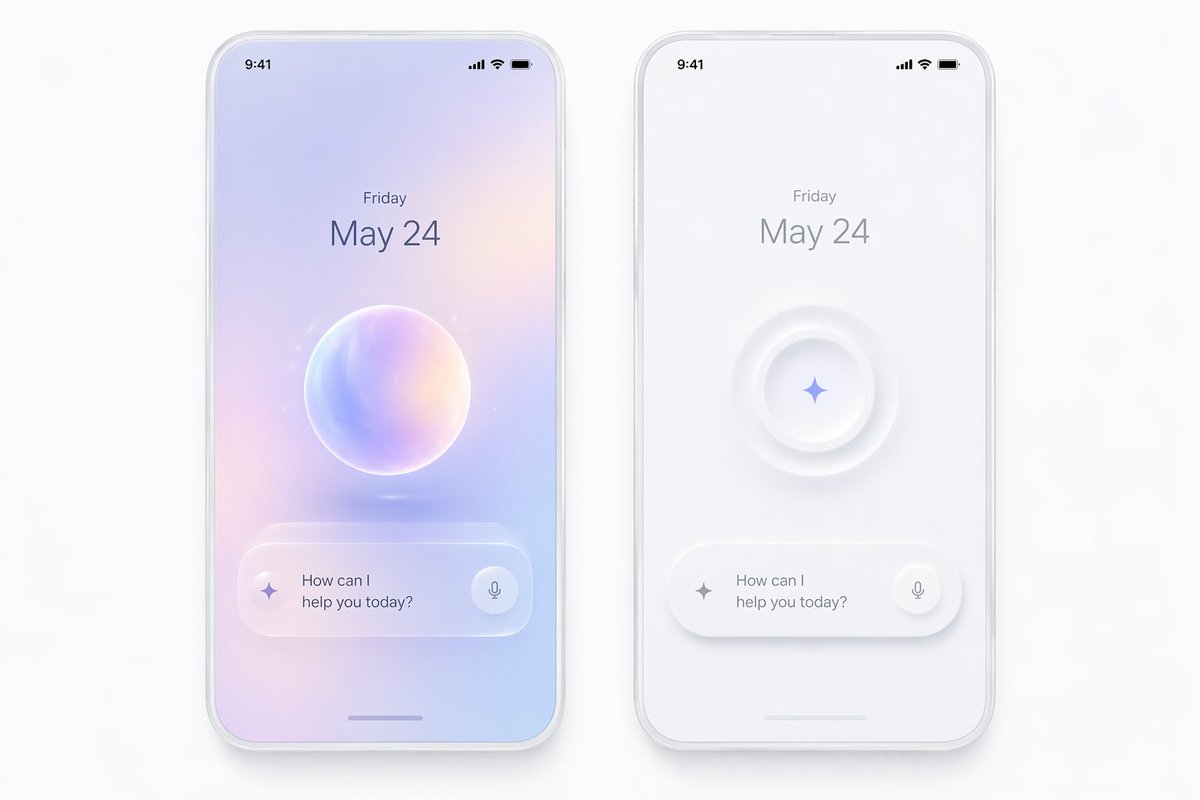
Generic themes will still exist. You will pick a style, a vibe, a tone. But the pixels inside that frame are generated on the fly.
A team recently shipped a prototype called Flipbook where every pixel on screen streamed live from a model. Just what you asked to see.
It's a glimpse of how UX for the next decade looks.
Personality > OS
Today, you like iPhone iOS vibes over Android's. But soon it'll be which agent personality you find fitting.
Some people want a friendly assistant. Others need a coach who pushes them. A teenager wants a funny peer that roasts them occasionally.
"TARS, set humour to 75 percent".
Phones will feel alive. Companions, not static bricks. People will switch phones less for prestige or an incrementally better camera, and more for who their phone is.
Nothing Phone is the early proof. Their hardware isn't groundbreaking. Neither is their software. But some of their models sold out shortly after launch because a specific group of people simply love what Nothing stands for.
This pattern will x10 once devices are known by their agents, not their OS. Imagine protege of your favourite celebrities and their characters being your companion in your pocket. A phone for kids whose agent never talks to strangers and shuts down the screen at 8 PM. A phone for elderly parents whose agent knows their medications and can reach the family in one tap. A phone built around a specific cultural identity - language, humour, values - that the generic defaults will never capture.
Users won't rush to replace Apple en masse, but each is still a ten-billion-dollar opportunity.
The pin
The phone in your pocket is not enough.
For an agent to do useful work in the background, it has to be with you. Always, but not as a second device.
Headphones come off, glasses are worn only occasionally, and a wrist device cannot do voice well.
What you want is something in between. A pin.
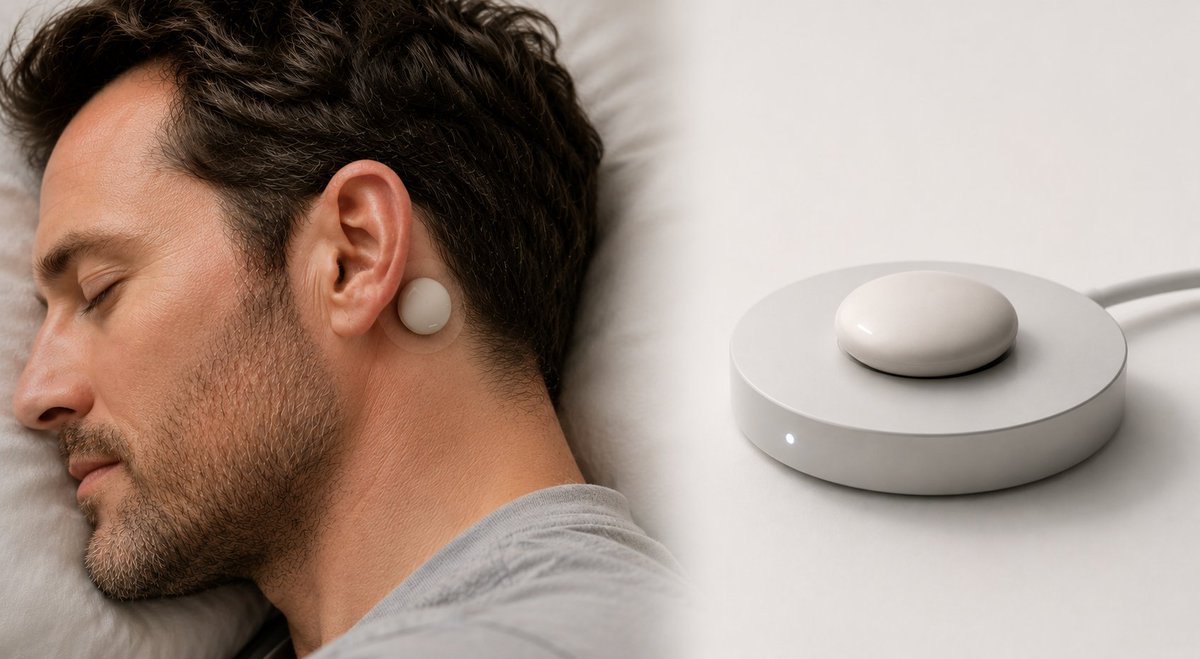
A small thing that lives on you most of the day, listens when you speak even when the phone is not in reach, and replies quietly in your ear.
The urge for an AI-first device has been around for a while, but none of the attempts so far nailed it. Rabbit, Humane, Friend, Limitless - all failed. Nobody wants a half-baked second device that competes with the one in their pocket.
You need the one that pairs to it.
The pin only works as an extension of the AI-first phone, not instead of it.
We are all racing for context
Today's personal assistants live as guests, dependent on platform on which they run. They need to request access to your mailbox, calendar, messages, contacts. They run inside an iMessage thread, a Slack channel, a browser tab. They pay rent every day in latency, friction, churn, and the risk of being deplatformed.
An agent built into the phone's OS pays no rent. It already knows how you write, who you owe replies to, when you go to sleep. The personal assistant category, as it exists today, gets replaced.
Silicon Valley is in a gold rush to find a successful consumer application for OpenClaw and Hermes. Nothing really clicked yet.
The reason is friction. A consumer agent will be adopted easily only when it sits in the device you carry every day.
Then the marketplace flips.
App Store made developers rich. The next marketplace is a marketplace of agents and skills. A luxury once reserved to developers now available to anyone capable of writing an .md file. You just need to know something others don't, have unique data others don't have access to, or offer a service other agents can access via yours.
The idea of agent marketplace has been around for a while, but will see its fruition only once everyday user has an agentic phone in their pocket.
An agent living in user's private device will have the best context.
Why won't Apple just do this?
They will try. With a delay.
The entry barrier has never been lower. China has white-label phone production in place with capable processors. The App Store moat will be gone, replaced by agent-first experiences and local models that run on the device.
None of this existed a couple of years ago. It is still a costly, but now democratised opportunity. Launching a new phone brand isn't delusional anymore.
And Apple has always been late to category shifts. Phones, streaming, generative AI. But what's more important, Apple sits on decades of infrastructure that doesn't migrate overnight. The App Store alone facilitates $1.3 trillion in annual sales - an obligation they must continuously support for their users, developers, and partners. And it's just one of many layers of its "infrastructure debt".
A new entrant has nothing to lose.
By the time they ship an entirely AI-first iPhone, the category will already be populated (not won) by other entrants with their own fan-bases.
And the "my Mac syncs with my iPhone" argument is weaker than it looks. A well-engineered always-on desktop app (e.g. WisprFlow) on the same network can deliver the same sync between the new phone and a Mac.
Bicycle for the Mind
The agentic phone is going to be the most tectonic shift and the most important product. A big W for humanity. A device to win us our time back.
This window opened only recently. Three things became true at once: powerful models that small enough to fit a pocket, democratised hardware production, and consumers growing tired of their device addiction and craving automation where agents can do the work while we live.
Right now, the people who'll build it are quietly finding each other.
If you had to pick, would you continue working on selling "carbonated sugar water", or join a team finally creating the "bicycle for the mind"?
It's time to build the Next Phone.